
The ROI Of Source-to-Pay Automation
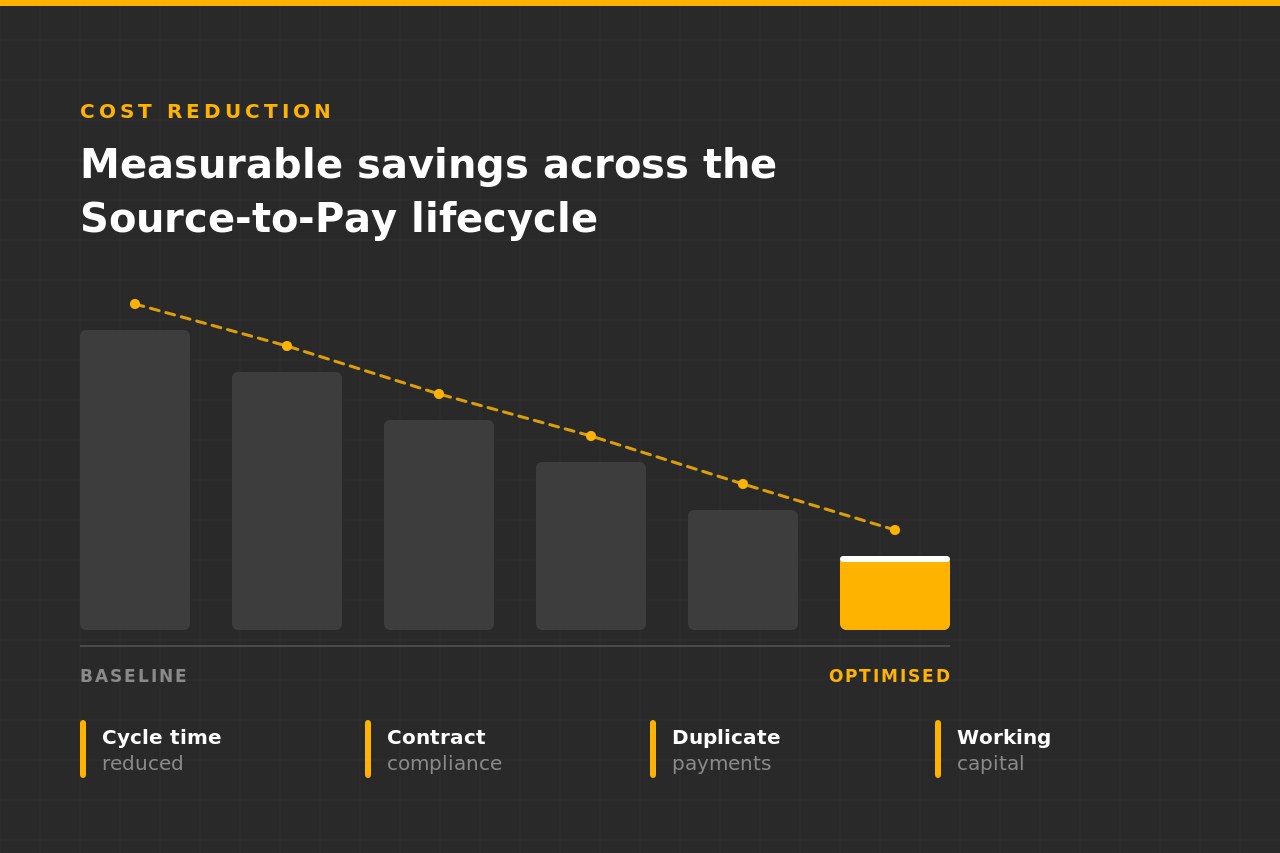
ROI scorecard
A practical framework to structure the conversation — validate the actual baseline with your team
In today's fast-paced, cost-conscious business environment, simply making sales isn't enough; managing every dollar spent is crucial for profitability. This is where Spend-to-Pay (or Procure-to-Pay, P2P) management software steps in as a game-changer, transforming fragmented, manual spending processes into a strategic, cost-saving engine. It's not just an efficiency tool; it's a powerful Return on Investment (ROI) driver, guaranteeing significant savings across the entire procurement and accounts payable lifecycle
Without an integrated Spend-to-Pay system, companies bleed money in ways that are often invisible until it's too late:
- Lack of Visibility: Budgets are siloed, purchases are scattered across departments, and finance has no real-time view of committed spend. This is the definition of "blind spending."
- Maverick Spend: Employees buy goods or services outside of approved contracts and suppliers, leading to higher prices, non-compliant purchases, and missed volume discounts
- Process Inefficiency: Manual tasks like paper-based invoice matching, chasing approvals via email, and manual data entry are slow, error-prone, and a massive waste of high-value employee time
- Missed Opportunities: Slow invoice processing means missing out on early payment discounts (often 1% to 2% of the total invoice), which can add up to substantial savings annually
Spend-to-Pay software centralizes all purchasing activities, giving finance and procurement teams the total visibility they need to stop the bleed
- Real-Time Spend Analysis: The platform consolidates data from purchase requisitions, purchase orders (POs), contracts, and invoices. This creates a single source of truth, instantly highlighting what is being bought, from whom, and at what price. This data-driven insight is the starting point for strategic savings
- Enforced Compliance (Stopping Maverick Spend): By mandating that all purchases go through the system with pre-approved supplier catalogs and contracts, the software automatically guides employees to the right vendor at the right price. No PO, no pay—policy is enforced by the technology itself
- Budget Adherence: Purchase requests are checked against department or project budgets before a commitment is made, preventing overspending before it even happens
Savings aren't just about cutting small costs; they're about making smarter buying decisions. P2P software empowers this strategic shift:
- Negotiation Power: Detailed spend analysis allows procurement to identify all fragmented spend with a single supplier. Consolidating this spend gives the company significant leverage to negotiate better pricing, volume discounts, and favorable payment terms
- Performance Data: The system tracks supplier performance (on-time delivery, quality, compliance), allowing the company to build stronger relationships with the best vendors and eliminate underperforming or high-cost ones
The automation within the "Pay" part of the process directly translates to hard dollar savings:
- Faster Invoice Processing: Automated workflows drastically reduce the time and labor involved in invoice handling. Tasks like 3-way matching (verifying the PO, receipt, and invoice) are done instantly by the system, eliminating manual errors and speeding up approval cycles
- Capturing Early Payment Discounts: With faster processing, companies can consistently take advantage of early payment terms (e.g., "2/10 net 30" - a 2% discount if paid within 10 days), turning a process bottleneck into a profit center
- Fraud and Error Reduction: Automated controls flag duplicate invoices, incorrect charges, and suspicious transactions, protecting the business from costly financial loss and ensuring every payment is legitimate
A Simple ROI Calculation Example
The Return on Investment for Spend-to-Pay software is typically swift and substantial
By calculating your net annual savings and comparing it to the initial investment, a typical business often sees an ROI of over 100% within the first year, demonstrating that the software literally pays for itself
Conclusion: Investing for Tomorrow's Profits
Spend-to-Pay management software is no longer a luxury—it's a core component of a healthy, profitable organization. By trading manual inefficiency for automated control, businesses gain total visibility, enforce cost-saving policies, and strategically leverage their purchasing power. Investing in this technology is not an expense; it's a strategic move that directly contributes to the bottom line, ensuring that every dollar spent is maximized for value
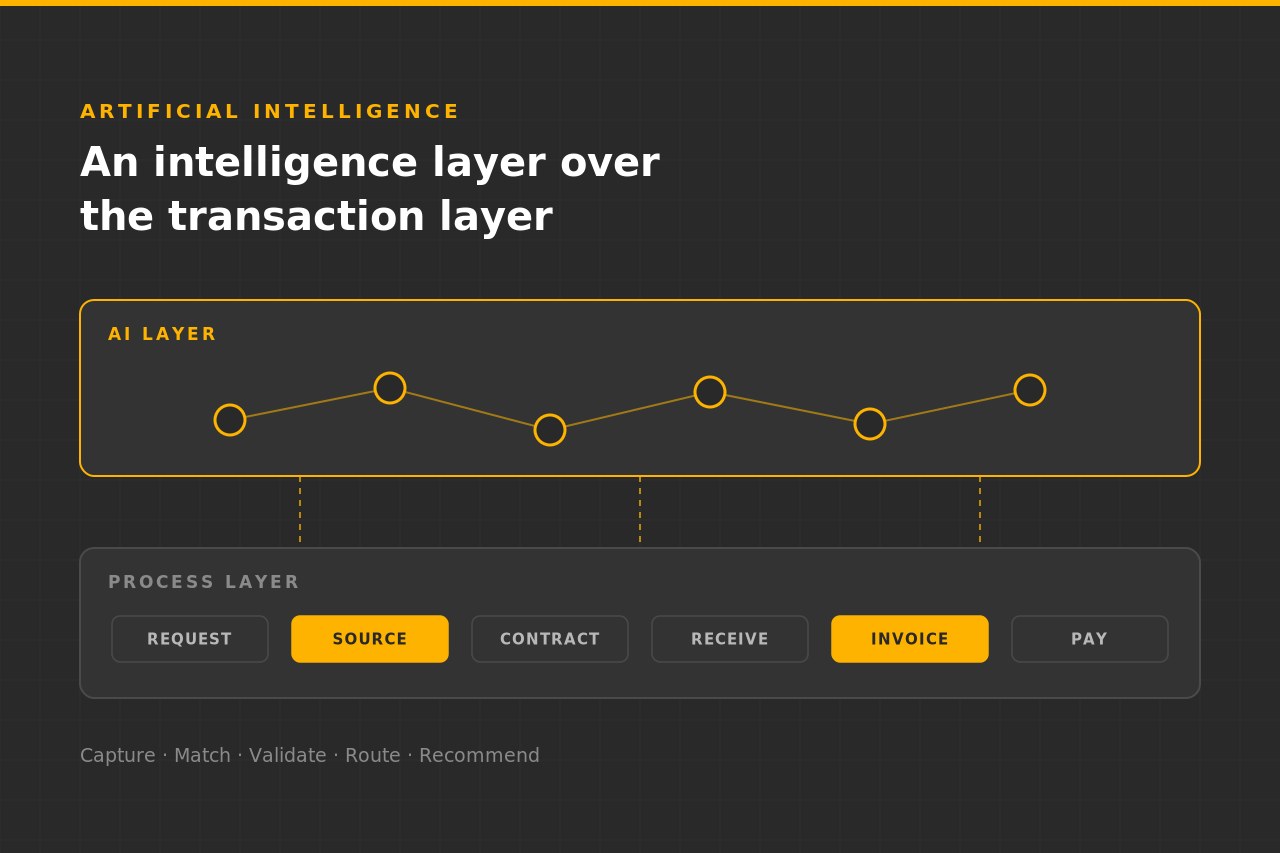
Ready To See The Platform?
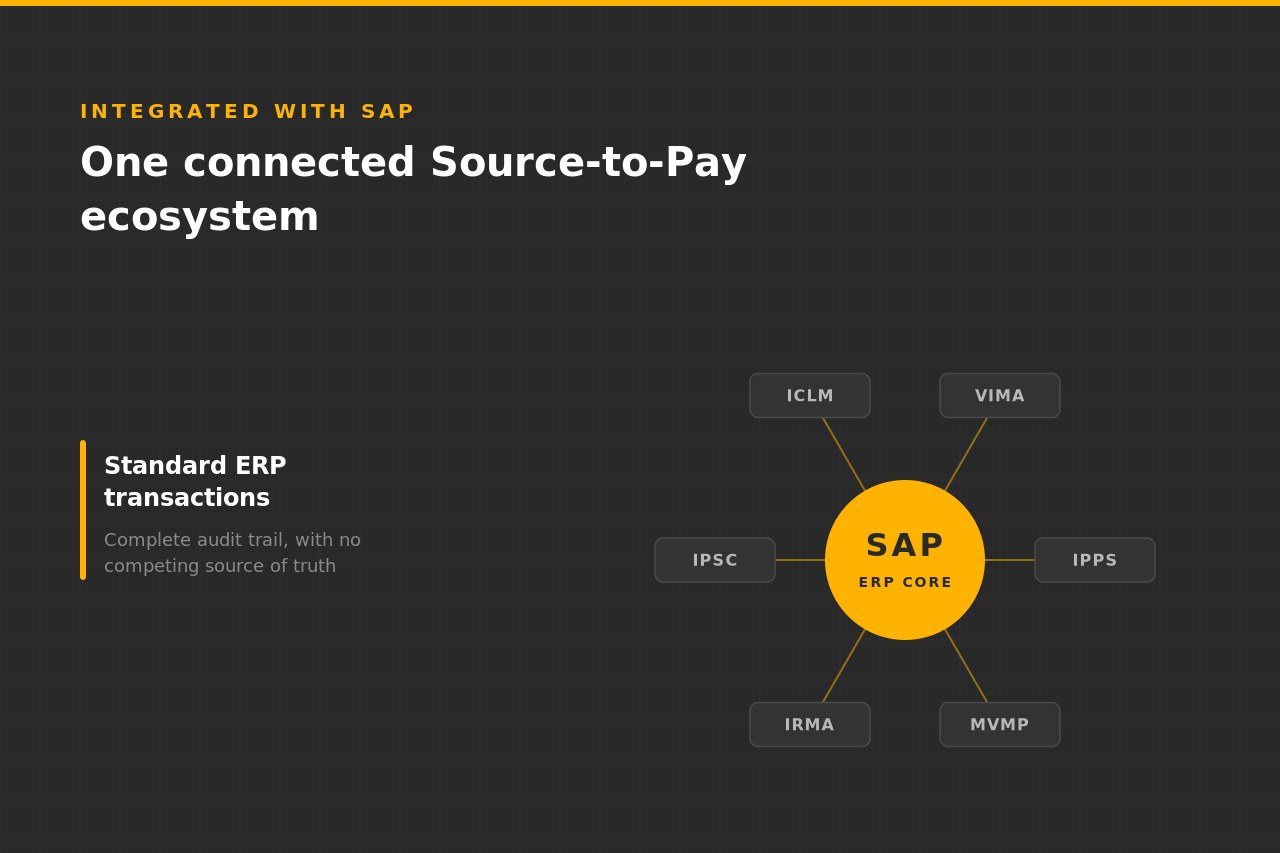
Book a Discovery Session and we will map your Source-to-Pay landscape against an out-of-the-box, ERP-integrated deployment